
Exploring Texture and Layers with Palette Knife Painting
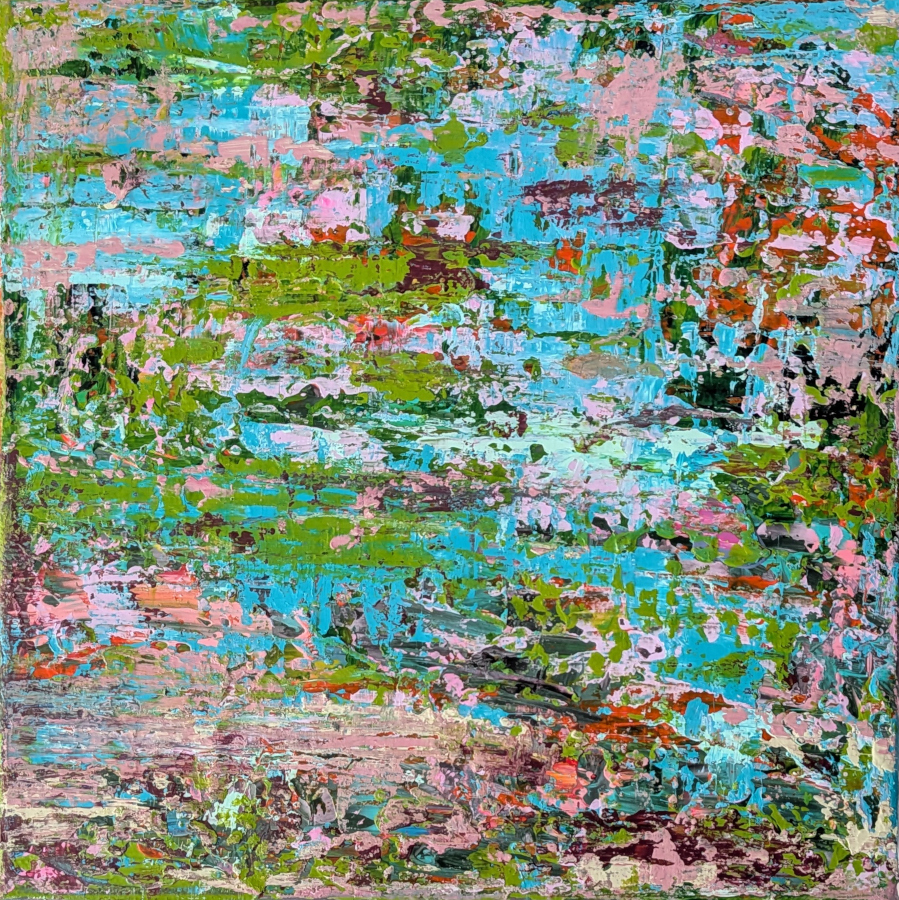 In this piece, I explored a layered palette knife scraping technique that quickly became one of
the most immersive and rewarding painting processes I have tried so far.
In this piece, I explored a layered palette knife scraping technique that quickly became one of
the most immersive and rewarding painting processes I have tried so far.
9 May 2026
As I continue exploring different painting techniques to discover which ones resonate with me the most, I decided to try yet another new approach today. This technique goes by several names depending on the artist and method, but I experimented with a palette knife scraping technique on a very small canvas to see if it was something I would enjoy.
Spoiler alert, I absolutely loved it and have already started a much larger canvas using the same process.
I am beginning to realize that I may never settle into one single niche style of painting, because so far I have genuinely loved exploring all of them. Each technique teaches me something new, and there is something magical about discovering the beauty and life that slowly emerges within each piece as it develops.
This technique was no different, although it definitely is not for the impatient.
There are probably ten to fifteen layers of paint on this small canvas. After every few layers, the paint needs time to dry before you can continue building the surface. Each color is dragged across the canvas with a palette knife, creating texture, movement, and unexpected blends of color along the way.
Slowly, the layers build into ripples, waves, and crevices where fresh paint either catches or skips across the surface. Then comes my favorite part. You scrape back into the wet paint, allowing earlier colors to re-emerge and reveal themselves again. The painting becomes less about covering the canvas and more about uncovering what is already hidden beneath it.
You are not simply layering paint. You are revealing its history.
The scraped-back areas feel almost archaeological, like little glimpses into earlier moments of the painting that still want to be seen.
Like many paintings, the hardest question becomes knowing when you are finished. I would say this technique may be one of the most difficult in that regard because it becomes almost addictive to keep adding layers just to see what happens next. Every scrape and every new color creates another surprise. At the same time, the process is incredibly relaxing and engaging. I think this may become my “therapy style” of painting because of how calming and immersive it feels.
As the layers developed, I kept getting hints of Monet’s Water Lilies in the piece. It carried both an aquatic and botanical feeling at the same time, almost like reflections drifting across water. Eventually I realized I did not want to lose that feeling by overworking it, so I finally chose to stop.
As always, I let my son name my paintings, and his interpretation of this one surprised me. While I kept seeing reflections, water lilies, and organic textures, he immediately said it looked like a corrupted screen or some kind of technological glitch. His original title was “Error of Technology,” which honestly made me laugh because he was not wrong. Eventually he shortened it to simply “Error”. I decided to add a question mark at the end because it leaves the meaning open. “Error?” Is it a mistake, a glitch, a distortion, or simply another layer of history showing through? I love that the same painting can hold completely different stories depending on who is looking at it.
To finish the piece, I mixed texture paste with color and applied it to the sides with a sponge, creating a soft textured edge that complements the layered surface of the painting itself.
Overall, I am genuinely happy with how this piece turned out, but more importantly, I think it reminded me of something I need to remember more often: creativity does not always need to be rushed toward a final result. I found joy in the layering, the experimenting, and the quiet surprise of discovering something beautiful along the way.
Every new technique seems to reveal another way of seeing, another way of slowing down, and another reminder that sometimes the most beautiful parts of art come from allowing layers of history, mistakes, and discovery to remain visible.